Echoes of Nomah
On the first day of July 2026, the Celtics traded star Jaylen Brown, and fans were extremely underwhelmed by the return.
Five-time All-Star Jaylen Brown for a 36-year-old Paul George and some likely mediocre draft picks?
The prevailing reaction, including mine, was WTF.
Paul George was once a basketball Maserati that did one-eighty-five.
He lost his license, and now he don’t drive.
Or at the very least, the engine makes a funny noise, and the rear bumper is falling off.
Of course, nobody in Joe Mazzulla’s offense drives, and George does shoot a decent three.
But before you totally dismiss the trade as folly, there is a historical parallel that might be instructive.
On the last day of July in 2004, the Red Sox traded star Nomar Garciaparra, and fans were underwhelmed by the return.
Six-time All-Star and fan favorite “Nomah” Garciaparra for Doug Mientkiewicz and Orlando Cabrera, two very mediocre hitters.
The prevailing reaction was WTF.
The city was stunned. The trade was widely panned in the press.
Who did this young GM think he was – the smartest guy in the room?
The clubhouse was also shocked.
Teammate Johnny Damon at the time: “We just traded away Mr. Boston, a guy that meant so much to the city, and just like that, he’s gone.”
I heard a story earlier this year, and I will caveat that I heard it secondhand, that Theo Epstein’s twin brother, Paul, called him when he heard about the Nomar trade and essentially asked Theo, “WTF,” and told him, “You had better be right.”
We all know how that one turned out. Well, some of my readers weren’t born yet, so for their benefit, the Red Sox broke an 86-year curse to win the World Series thanks to an unprecedented and nearly impossible comeback against the Yankees.
There is a documentary about it on Netflix titled The Comeback.

It is well known that Theo Epstein’s father, when he got the Red Sox GM job, advised him to ‘Be Bold’. Trading Nomar for two defense-first players qualified as bold.
It took Dave Roberts being safe on his steal attempt by a fraction of a second for the unconventional gamble to work. Posada’s throw is a little lower and less to the third base side; Roberts is out, and suddenly Theo is the loneliest and stupidest man in town.
Theo made the trade in part because the relationship between Nomar and the team had soured to the point that it was affecting the club.
That offseason, they had tried to trade him in a three-way deal with the Rangers and White Sox for a package that included Alex Rodriguez. All parties had agreed to the trade. A-Rod had agreed to restructure his contract. But the MLBPA refused to sign off on the restructured deal, essentially killing the trade, and the Rangers ultimately traded A-Rod to Boston’s biggest rival, the Yankees.
Theo also made the trade because the data showed Boston was not going to win with such a porous defense. Nomar had injured his Achilles, and it had compromised his range at shortstop.
Sound familiar?
Red Sox fans will remember the cameras trained on Nomar sitting in the dugout and not going into the extra-innings game where Derek Jeter made his famous tumbling into the stands catch.
To be extremely clear, Jaylen Brown did nothing of that sort. He always played hard; he led the Celtics to a championship in 2024, winning the MVP of the Finals and Conference Finals along the way. He competed and won in ways that Nomar had not.
Did he make a perhaps ill-advised comment about this being his favorite year? Yes.
Have you heard any veteran teammates come to his defense or say they did not want him traded? If they have, I have missed it.
And sometimes that silence does the talking.
There are some parallels in the analytics, though, and the more I have read about them, the clearer it is that not only Stevens but the rest of the NBA viewed Brown as a good but not elite player with a superstar’s contract.
In the NBA, that made him a liability rather than an asset.
There are essentially three aspects of being a great NBA player offensively:
Scoring – both in terms of volume and efficiency – we have all played pickup basketball with the guy who scores but is a ball hog who hucks it up every possession.
Passing – not just assists, but keeping the ball moving to help the offense get better shots. Some call it a hockey assist, but it might even be two passes before the shot. That ball movement is even more important in an offense like the Celtics, which relies so heavily on the three.
Dribbling – Not turning the ball over.
Let’s look at Brown on all three dimensions:
Scoring – Brown definitely scores volume-wise, and the Celtics will need to make up for that scoring. But he is around league average in terms of efficiency.
Passing – Brown dribbles a lot and clogs the offense. Both the eye test and the analytics confirm this fact.
Not turning the ball over – For a player with the ball in his hands so much, Brown turns it over on the dribble a lot more than most elite offensive players.
This Twitter post goes into the numbers on all three of those in a deep and compelling way.
For those like me who are not as deep into NBA analytics, simply consider this.
The last three seasons, in games Jaylen Brown did not play, the Celtics are 36-6.
Could those numbers be a bit skewed by the Celtics sitting him for ‘load management’ or somewhat nagging injuries against the weaker teams in the NBA? Definitely.
But 36-6 is a 70-12 pace. In all of NBA history, two teams have won 70 games – Michael Jordan’s championship-winning 1995-1996 Bulls and Steph Curry’s 2015-2016 Warriors (who made the finals but lost to Cleveland).
And in the games he has played, they have been consistently better when he is off the court than when he is on it. Including the playoffs.
Jaylen Brown is a good player, but he does not make the players around him better.
For as many playoff games as Tatum and Brown won together, they only won one championship.
I am pretty sure Brad Stevens knew what the fans’ emotional reaction to the trade would be.
He is paid to think differently from a fan.
He must consider the financial realities of the NBA’s confusing and restrictive salary cap, the team-level analytics, and the relationship dynamics between Brown, the front office, the coaching staff, and his teammates.
I am sure he has information we do not have on the last two.
There are differences between the two trades for sure. Are the Celtics going to win the title this year without Brown, as the Red Sox did in 2004?
Likely not. This trade was more geared towards 2028 and beyond than winning now. George could miss 70 games. The wheels might fall off when the Maserati tries to go 45.
But there are also parallels. Both franchises faced genuine fan disbelief. Both front offices acted on analytics, and both involved souring and complicated relationships.
Like with the Red Sox on the diamond, the proof will ultimately be on the court.
So maybe we should wait to see them play some games before judging a capable executive’s seemingly confounding trade as a failure.

Our special series on the USA’s Top Ten Sports Moments will continue this week with the top three. Below are numbers four through ten.
These are the moments that have us ‘Proud to be an American’ and chanting U-S-A, U-S-A. See below for the prior editions.
Number 10 was part of a Boston Daily Sports Recap, but Numbers 9 through 1 are standalone pieces.
Fire and Ice
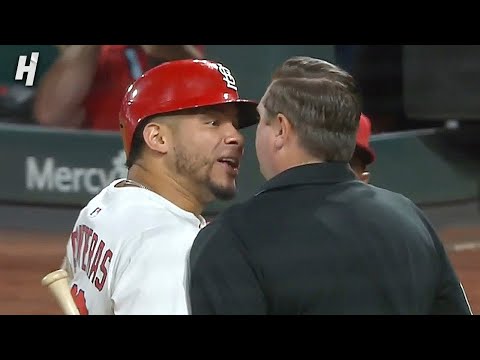
All week, the fiery Venezuelan Willson Contreras got the headlines for throwing his helmet in response to the racially tinged yell from Nationals pitcher Cade Cavalli after he struck out Contreras with “Sit Down, Boy”.
It was not the first time he has thrown equipment. In prior incidents he has thrown his mask, a bat, and even a bucket of chewing gum.
The video below is an epic meltdown.
But it was Ranger Suarez, the Venezuelan so calm that MLB.com says his teammates often wonder if he has a pulse, who will be going to the All-Star game in Philadelphia.
Willson Contreras will likely get even more headlines for being what ESPN called the biggest all-star snub, despite there being an opening when the extremely undeserving starting first baseman, Vladimir Guerrero, declined the invitation to rest a balky back.
Suarez, on the other hand, will be returning to Citizens Bank Park for the All-Star Game.
It will be his first time back at “The Bank” after pitching for the Phillies for the first eight years of his Major League career.
Word from Philly when the Red Sox signed Suarez was that he had lost velocity at the end of last season. There were questions about his arm and his stats had trailed off at the end of last season along with the velocity.
But Suarez has never been about velocity. He brings poise. He brings savvy. He brings ice.
He also brings an outstanding changeup.
You could argue, and I would probably agree, that if a Red Sox starter were going to be named to the All-Star game, it should have been Sonny Gray. He is 10-1 on a 39-48 team. It is not quite 1972 Steve Carlton territory, where the lefty accounted for 46% of his team’s victories, but Gray’s win total (and that just includes the games he has personally won, not that the team has won when he started) is now 26% of the Red Sox’s win total. He also has a 2.61 ERA versus Suarez 2.94.
Suarez, though, has done what many others have not in living up to the pressure of being a big free agent signing for the Red Sox.
Remember Pablo Sandoval? Carl Crawford?
Bigger busts than Sydney Sweeney.
Suarez faced the additional pressure of being the face of the offseason pivot to pitching and defense. The salve to the wound of losing Alex Bregman to the Cubs, Pete Alonso to the Orioles, and of not even really trying to pry Kyle Schwarber away from the Phillies.
Suarez was Breslow’s signature signing: five years, $130M. He did not start well (a rough first start in Boston, the result of skipping a proper arm build-up to pitch for Venezuela in the World Baseball Classic).
He has gotten better, though, along with the weather. In 30 innings in June, he pitched to a 2.10 ERA thanks to a strikeout-to-walk ratio of 35:7.
Now he returns to Philly as a second-time All-Star, with his first chance to play in the game (he was selected in 2024 but was unavailable due to injury).
Sometimes you need fire.
Sometimes you need ice.
Here’s to You, Mr. Robinson
While the city spent the week confused by the Jaylen Brown trade, Brad Stevens quietly fixed the two things that contributed to the Celtics being bounced by those same Sixers in the first round.
Nobody is really talking about these moves because, just after hours, they were made they were overshadowed.
So here’s to you, Mitchell Robinson.
Celtic fans will love you more than you will know.
As Simon and Garfunkel once sang —
We’d like to know a little bit about you for our files — and the analytics guys
We’d like to help you learn to help yourself — at the free-throw line
Look around you, all you see are sympathetic eyes — until we traded Jaylen Brown
Stroll around the grounds until you feel at home — at TD Garden
Mike Conley’s NBA career is 20 years old and just 1 year younger than the Benjamin Braddock character in The Graduate.
Below are scouting reports on both and how they might fit into the new-look Celtics.
Mitchell Robinson, C — 3 years, $47.4M (player option, Year 3)
Mitchell Robinson is a 7-foot problem for the other team. Robinson just won a title in New York as exactly the kind of center Boston needs, a rim-runner and a menace on the glass. He led the NBA in rebounds and offensive rebounds per 100 possessions last season, and here’s the number that should get your attention: his 17.2% career offensive rebound rate is identical to Dennis Rodman’s.
Robinson, though, has never visited with Kim Jong-un or married Carmen Electra.
He shot 72.3% from the field last year because essentially everything he takes is a dunk or a layup, and he protects the rim in a way the 2026 Celtics badly needed after watching teams walk into the paint in the playoffs.
What keeps you up at night: Two things, and they’re big ones. First, health. Robinson has played more than 70 games exactly once in his career and has missed roughly 40% of his team’s games over the last several years. You are not buying 82 games — you are buying a guy you hope is upright and nasty come playoff time. Second, and Boston fans know this one intimately, the free throws. Robinson shot 40.8% from the line last year, the worst in the league among qualified players, and a ghastly 29.3% in the playoffs.
That makes him unplayable come crunch time.
The coach who most famously weaponized Robinson’s free-throw shooting — who sent guys to grab him on the first possession just to force him off the floor — was Joe Mazzulla. Boston used “Hack-a-Mitch” against the Knicks in the playoffs. Now Mazzulla has to solve the problem he invented, from the other side, not dissimilar to Mike Vrabel once using a Bill Belichick tactic against him during the Titans’ playoff win over the Patriots that ultimately sent Tom Brady off to Tampa Bay.
Mike Conley, PG — 1 year, veteran minimum
What he is: As a 20-year professional, Conley’s NBA career itself could nearly be The Graduate. Conley is about to become just the 14th player in NBA history to reach his 20th season. He has never once, in two decades, been whistled for a technical foul. He owns four Sportsmanship Awards, the most in league history, and two Teammate of the Year nods.
On the floor, he’s a career 38-plus-percent three-point shooter who lives at the top of the assist-to-turnover leaderboards. He is a low-mistake, high-IQ, zero-drama veteran point guard, something the Celtics very much needed and that will help come crunch time.
But Father Time is undefeated, and he’s knocking. Loudly. Really loudly.
Conley turns 39 in October. He averaged a career-low 4.5 points in 18.4 minutes last year, lost his starting job in Minnesota, and greatly struggles to stay in front of quicker guards defensively and needs to be hidden. Not sure what the analytics say about Conley, but the eye test says you can only count him for 10 to 15 minutes.
Brad Stevens tried to recruit Mike Conley to Butler out of an Indiana high school two decades ago. Conley picked Ohio State, but Stevens never stopped admiring him — called him “a special player” and “one of the elite players in the NBA” back in 2017.
How They Fit the New-Look Roster
The two signings are the answer to the two questions the first-round exit asked. Boston got pushed around inside and had no steady hand running the second unit. Robinson answers the first. Conley answers the second.
Neither is a star. Both are exactly what a contender’s supporting cast is supposed to look like.
The projected group is Derrick White and Payton Pritchard sharing the point, Paul George sliding into Brown’s old wing spot next to Jayson Tatum, and a center rotation built around Neemias Queta and Robinson as the muscle behind or beside him. Conley is the professor for a young second unit that suddenly matters a lot more without Brown.
What should excite you:
Plastics.
Actually, this is a smarter, tougher, more playoff-durable roster on the margins. Robinson gives Boston a genuine rim-protecting, glass-crashing center for the first time in years and helped the Knicks win a title. Conley gives a suddenly younger bench a calm, turnover-averse adult in the room.
What should concern you:
They say the best ability is availability.
Robinson can’t be trusted for a full season, and Conley is 39. If either misses real time, Boston’s margin for error, already hard-capped at the first apron because of the Robinson deal, gets thin fast. This is a roster that will go as far as its health and the development of its young players (Scheierman, Gonzalez, Cenac Jr.) allow.
The Robinson and Conley moves raised the Celtics’ floor.
Unfortunately, the Brown trade may have lowered the ceiling.
Thanks for reading Issue 11 of The Boston Sunday Sports Section. If you’re not yet a subscriber, we’d love to have you. And if you enjoyed it, please share it with your fellow Boston sports fans.